How to Increase your Speed over the 10K Distance

By | Toronto Waterfront 10K | No Comments

Getting into the routine of training gets people thinking about personal bests, and wanting to run faster than before.  At the start of training the thought of crushing a previous time may feel far-fetched. However, as runners get into a rhythm and regain their fitness, the idea of trying to crush their time in an upcoming race feels more achievable, assuming your training has set you up to do so.  Here are a few tips for gearing up to run a fast 10K:

Incorporate specific speed work:

Interval training is key when trying to increase your speed over 10K.  It allows the body to adapt physiologically to the demands of the race.  Intervals can be a mix of different duration, pace and distance.  Typically interval workouts are done at race pace or faster.  Use anything from track intervals, sustained effort tempo runs, hill repeats, and fartleks to keep your training varied and fun.

Example workouts:

  • Mile repeats: 4-6 x 1 mile with 2-3 minutes recovery jog. Start at 4 reps, then build towards 6.  Aim for these to be around race pace.
  • Minute reps: 12-20 x 1 minute with 1 minute recovery jog.  Remember the recovery time is shorter on these so try to keep your hard intervals at a pace that you can maintain for the whole workout.
  • 1km floats: 5-10 x 600m “on”/400m “off”.  This is a sustained effort workout where the 400m “off” is still as a good pace.  Think of it like 600m at 10km pace; 400m at marathon pace.  It helps your body to recycle any lactate buildup so you’re more efficient.

Maintain endurance:

While running a fast 10K requires some speedwork, don’t forget how important having good endurance is.  If you have a good endurance base, running 10K won’t seem terribly long.  Having a combination of getting your legs used to running further than 10K, as well as running shorter intervals as a faster pace is essential.  Consistent training and regular long runs will effectively improve your endurance.  A common duration for a long run while gearing up for a 10K race is about 90 minutes long.

Understand pacing:

Realize that running hard for 10K is tough.  It requires discipline in order to effectively push your limits but remain relaxed.  Well, until the last 400m and then you just have to give whatever you have left in the tank!  It’s easy to get caught up in the rush of adrenaline that surges through your body when the starting gun goes off.  If that happens, it could come back to bite you in the butt when your legs start to shut down at 6K.  Before the race starts, sit down and realistically determine what time you think you’re capable of running.  Then, figure out the splits required to hit that time.  There are lots of online paces calculators that can help determine your average pace which will hopefully keep you controlled throughout the race.  Take note of any big hills that could affect your time, and adjust accordingly.  Try to race evenly, or even negative split (running the second half of the race faster than the first).

Avoid overtraining:

When adding speed into your training program, know that it takes more out of you than running easy all the time.  Overtraining is what happens when you put too much stress on your body than it can handle and adapt to.  To avoid this from happening, keep this points in mind:

  • Keep track of your weekly mileage and don’t increase your mileage than more than 10% per week.
  • When incorporating speed work, reduce your mileage.  Intensity is tough to measure, so cut back from excess mileage to balance out the training.
  • Don’t increase mileage and intensity simultaneously.
  • Schedule rest days.
  • Alternate hard workouts with easy runs, or cross-train instead of piling on “junk miles”.

Pick a potential PB course:

Throughout training you’ll understand your strengths and weaknesses.  If you’re a powerhouse on hills, choose a rolling course; if you love loops, don’t choose an out-and-back course; if you thrive on flats, pick one that isn’t exposed to the elements.  Typically a flatter course is the fastest choice, as long as it’s not too windy or twisty.  Also, choose a race that has a lot of people registered, or has a history of runners that are around your target time.  Check previous year’s results and see if it’s likely that there will be a group to tuck in with.

Taper, taper, taper:

After putting in months of training, the last thing you want to do is to overdo it the week before the race.  In the final week before the race, it’s unlikely you’ll gain any additional fitness, and instead could tip you over the edge.  To avoid this from happening, reduce your mileage and intensity of yours runs, with your last speed session about 4-5 days before race day, to allow your body to fully rest and be ready to roll.
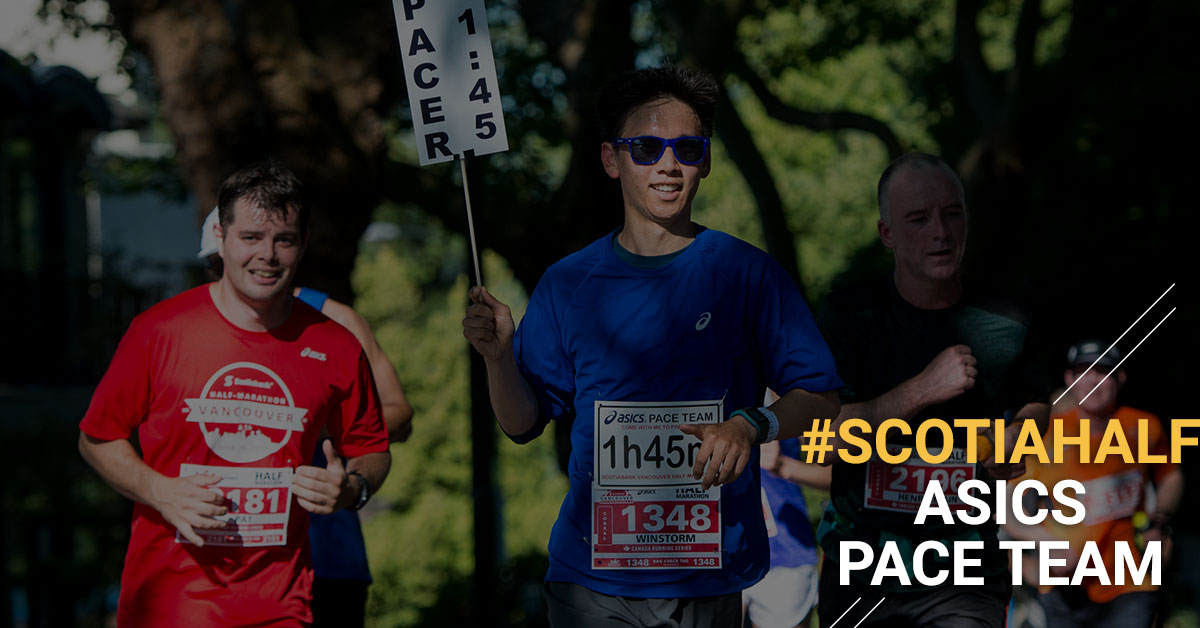
Asics Pace Team at #ScotiaHalf 2017

By | Scotiabank Vancouver Half | No Comments

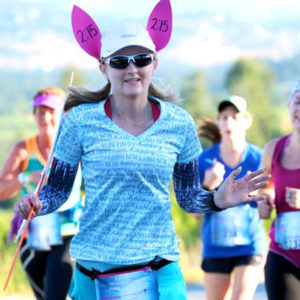
We’re excited to introduce the 2017 Asics Pace Team for this year’s Scotiabank Vancouver Half-Marathon! Two pacers will run with each of the following pace groups – 1:45, 2:00, 2:15, and (new this year) 2:30.

1:45 Pace Group Leaders

Mike Hsiao

Mike is a recent engineering graduate, avid volunteer and a marathon runner who was diagnosed with the Fatty Liver Disease as a child. In 2012, while he was in second year university, he collapsed and was sent to the ER due to a combination of many health conditions, including being borderline obese. Since then, Mike decided to make a change to become healthier. He picked up running and an active lifestyle (and lost 1/4 of his weight in the progress). He has kept going since, and have ran over 60 races varying from a 5km to full marathons. Mike has made a goal to do 100 races before he is 25 to raise awareness for many health causes. Mike is the founder and CEO of Race Force, which is a nonprofit organization that have helped organized or assisted more than 150 sporting events (such as Scotiahalf) since inception. Mike is excited to be an Asics pacer for the 2017 Scotiahalf for 1:45 and invite you to connect with him!

Kevin Schwab

Following his Half Marathon debut in Munich in 2010, Kevin has been running 10Ks and Half Marathons throughout Canada over the past few years. His two running highlights to-date include winning the M<25 age group at Scotia last year, as well as completing his first Full Marathon in Portland in October. Battling with injuries for most of the last half year, Kevin is excited to assist other runners in achieving their goals at Scotia this summer. Oh and getting to wear bunny ears – that’s pretty big, too.

2:00 Pace Group Leaders

Greg Faber

I started running in 2012 to shed some pounds and reclaim my health. It started with casual walks just to get my body adjusted to movement. As I saw other people running through the park, it motivated me to do more. I picked up my pace and before I knew it I was running my first 5km race. Today, I am proud to say that I have completed many races ranging from 5k’s to ultra marathons and what started out as simple exercise has turned into a lifestyle.

I have since not only lost all the excess weight I carried around, but have gained a whole new community of friends and likeminded individuals that have all caught the running bug. Moving forward, I want to inspire and motivate others to reach their own running goals. I found that pacing for the Scotiabank Half-Marathon is one way to give back to the sport I love!

Elisha Allen

Elisha is a Vancouver local with a life-long love of running. Over the past few years she’s completed a variety of long distance races including a 23 km trail race up Whistler Mountain and the 2017 Boston Marathon. She’s extremely passionate about helping others explore and enjoy running and can’t wait to help you reach your half-marathon goals! If you want to check out her latest running adventures you can Elisha on Instagram @theruntoboston.

2:15 Pace Group Leaders

Andy Arevalo

Andy Arevalo is a runner that has started his running since 2015.

In late 2015, he came across a local Chinese running group called LaPower. He joined the group and has made many good friends that share the same passion in running and life style.

He has run many race such as The Sun Run, BMO half marathon, Scotiabank half marathon, and the Rock “N” Rock Half marathon in which he had made his PB in the race.

Having this opportunity to run as a pacer for the Scotiabank half marathon 2017 is his honour. This is going to be a very exciting and memorable experience for Andy, and he is going to achieve your goal with you.

Courtney L.

I started running in 2010 and got hooked. It started with one half marathon just to see if I could do it and has led to many more half marathons, marathons, 5k and 10ks all over North America. I love to run and I love to get other people excited about running. And I enjoy helping people reach their running goals. I have lead running clinics and paced numerous 10ks, half marathons and marathons. It is a great feeling to help someone reach their goal – to be a small part of their success is awesome. I am looking forward to running with the group to make the 2:15 half marathon time!

2:30 Pace Group Leaders

Sharon Sandhu

Hi name is Sharon and I moved from England to Vancouver in 2012. I first started running in 2011, my friend who was a run coach convinced me to try something new and I signed up for my first half marathon in Basingstoke UK (with hills). Running has always been a great way to meet people and I am super excited to be a pacer at the Scotiabank Half Marathon, this will be my third year running the course and I’m looking forward to being a source of motivation for the awesome runners on the day!

Lisa Brown

My name is Lisa Brown and I am the pacer for the 2:30 group. The party corral!

My first race was the Scotiabank half marathon in 2013. I was hooked. Since then I have run 7 half marathons, 3 full marathons, numerous 10 and 5k races. For the last year I have been volunteering with learn to run and 5k clinics.

Run with the Asics Pace Team this June – sign up today!

lululemon joins Toronto Waterfront 10K

By | Toronto Waterfront 10K | No Comments

Canada Running Series is delighted to announce a new partnership with lululemon, who will become title sponsor of the Toronto Waterfront 10K, to be held on Saturday June 17th, 2017. The course will run through the heart of the city, along the lakeshore and finish with a celebration at Bandshell Park at Exhibition Place.

As the official retailer and apparel partner of the event, lululemon will transform the race experience. Each participant will receive a lululemon technical t-shirt as part of their kit. Participants will get a chance to take part in an 8-week Training Program led by lululemon run ambassadors at their Queen Street and Cumberland locations. Additionally, participants will be encouraged to take part in the brands yoga and recovery programs which will be offered exclusively at their Queen Street store.

“This is a truly meaningful partnership for Canada Running Series and our loyal runners,” said Canada Running Series Race Director, Alan Brookes. “It’s a perfect pairing of two outstanding Canadian organizations that will combine leading-edge, high-performance apparel and run activation with Canada’s premier, best-organized running series. We are both passionately committed to excellence and to our Canadian running community. With lululemon’s partnership, we expect the Toronto Waterfront 10k to transform the running and road race experience in Toronto and send good vibes across North America.”

Everyone is encouraged to join us on Saturday June 17th. Those interested in participating are encouraged to register early, as this year’s race is currently just $50 with a cap of 7,000 runners and is expected to sell out quickly. Registration opens Tuesday April 11th at 10:00 a.m. EST. Information and entry: http://toronto10k.com

Half to Half Training Program

By | Scotiabank Vancouver Half, Training Tips | No Comments

Spring racing season is in full swing so it’s always worth looking forward to your next goal. The months of training that have prepared you for a spring 10km, Half-Marathon, or other distance can set you up for many subsequent races.

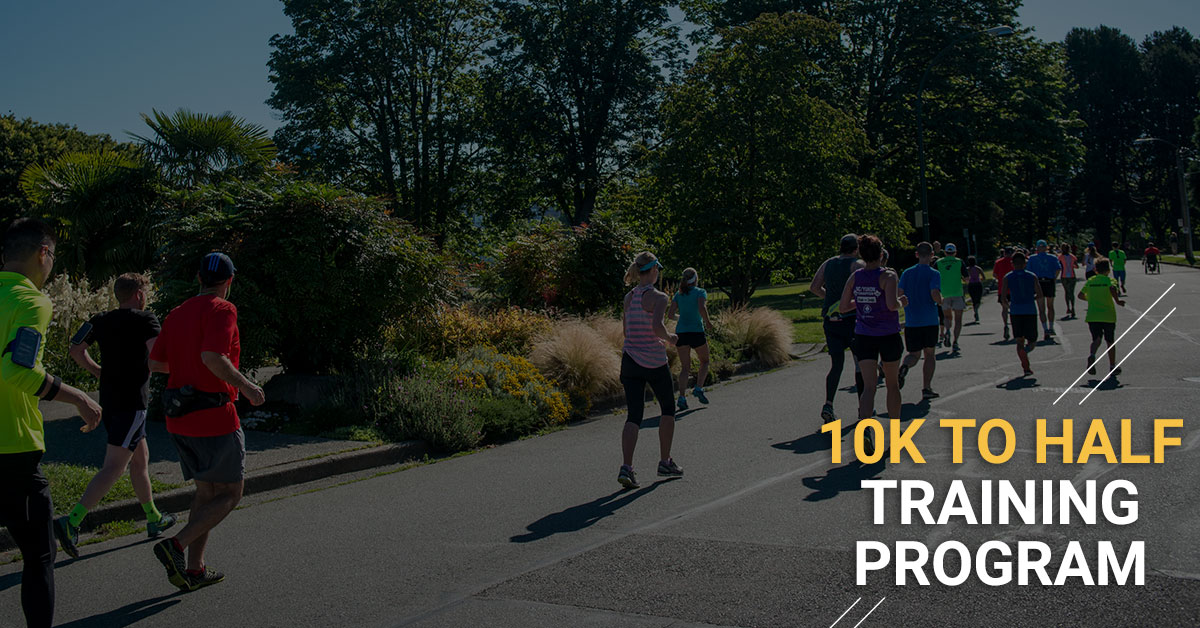
If your spring goal was a Half-Marathon, keep the momentum going with the Half-to-Half program below! We also have a beginner 5km program and simple Half training schedule as well. Race a 10k this spring? Scroll further down for the 10k-to-Half program.

Half-to-Half Training Program
WEEK MON TUE WED THU FRI SAT SUN
May 8–14 Rest 5km Cross-train 4km Rest Cross-train 10km
May 15–21 Rest 7km Cross-train 6km w/ hills Rest Cross-train 13km
May 22-28 Rest 7km Cross-train 7km Rest Cross-train 15km
May 29- June 4 Rest 8km Cross-train 7km w/ hills Rest Cross-train 17km
June 5–11 Rest 9km Cross-train 8km Rest Cross-train 19km
June 12–18 Rest 8km Cross-train 8km w/ hills Rest Cross-train 12km
June 19–25 Rest 5km Rest 4km Rest Rest 21.1km — Event Day!

Cross-train with swimming, hiking, cycling, yoga, or strength training. Make sure not to over do it on these days as they are part of your recovery process. Recovering properly is essential to bridge between your two races, so actually rest on those Rest Days! When adding in hills, try to incorporate a few steady climbs into your route, anywhere from 200m to 500m long.


If you’ve just finished your training for a 10k, it’s a perfect launching point for a new distance: the Half-Marathon. Running 21.1km may seem daunting at first, but it’s likely that when starting to prepare for your 10km race that seemed scary too! With a gradual build in mileage, this 10km to Half-Marathon program will prepare you to toe the start line at your next Half-Marathon with confidence!

10k to Half-Marathon Program
WEEK MON TUE WED THU FRI SAT SUN
Apr 24–30 Rest 4km Cross-train 4km Rest Cross-train 7km
May 1–7 Rest 5km Cross-train 4km Rest Cross-train 10km
May 8–14 Rest 6km Cross-train 5km w/ hills Rest Cross-train 12km
May 15–21 Rest 6km Cross-train 6km Rest Cross-train 14km
May 22–28 Rest 7km Cross-train 6km w/ hills Rest Cross-train 16km
May 29–June 4 Rest 8km Cross-train 7km Rest Cross-train 18km
June 5–11 Rest 8km Cross-train 7km w/ hills Rest Cross-train 20km
June 12–18 Rest 8km Cross-train 7km w/ hills Rest Cross-train 12km
June 19–25 Rest 5km Rest 4km Rest Rest 21.1km — Event Day


The Scotiabank Vancouver Half-Marathon & 5k offers the perfect summer race weekend. The Half takes participants along a beautiful route from UBC to Stanley Park. The 5k route features Lost Lagoon and the English Bay seawall. Bask in the summer sun and sign-up for the Scotiabank Vancouver Half-Marathon or 5k today!

Date: June 25, 2017
Start time: 7:30am (Half) | 9:30am (5k)
Start location: East Mall, UBC (Half) | Stanley Park (5k)
Finish location: Stanley Park

Natasha Wodak Claims Race Roster Spring Run-Off 8k

By | Race Roster Spring Run-Off | No Comments

By Paul Gains

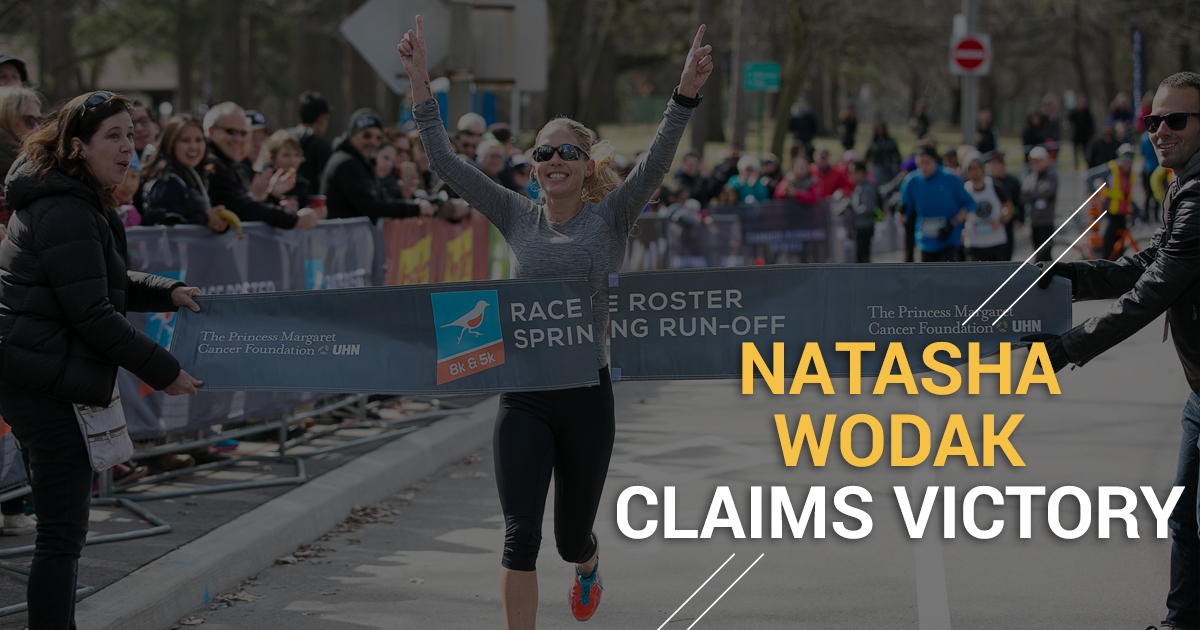
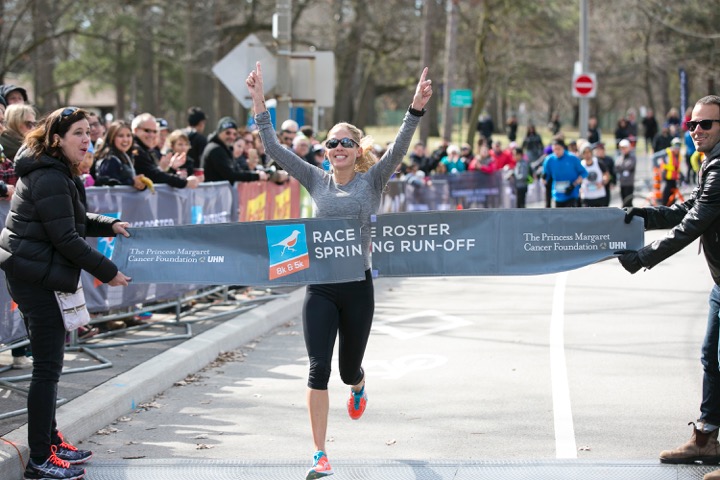
Natasha Wodak’s first race after surgery on her foot three months ago proved successful as the 35 year old Canadian Olympian handily won the Race Roster Spring Run-Off 8k in Toronto’s High Park.

More than 3,500 runners were led to the start line by piper Duncan McIntyre,  a tradition since the race’s inception 40 years ago, but Wodak was never challenged. This edition launched the 2017 Canada Running Series.

With a cold wind blowing across the hilly course, Wodak, the Canadian record holder at 10,000m on the track (31:41.59) and at 8km (25:28) on the roads, tucked in behind a few of the male runners early on until she dropped them one by one. She crossed the line with a smile while flashing ‘V’ for victory signs. Her winning time was 27:55.

Photo credit: Inge Johnson/Canada Running Series

“I figured I was capable of running about 27:45 to 28:00,” the Vancouver resident said afterwards. “I thought that would be really painful for me at this point. But I felt really strong and it felt more like a tempo run than anything, So I am really pleased with where I am at considering it has been such a short time since I have been back running since my surgery. It’s good. I am excited for the spring”

“Everybody told me it was super hilly but with the uphills come the nice down hills so it evens out. It was a beautiful course and I had lots of guys out there to talk to and complain about the hills and stuff. I thought it was a great course. Lots of fun.”

Wodak earned $1,500 for the victory which will come in especially handy since her contract with Asics ended following the Rio Olympics Games. Next on her schedule is the Vancouver Sun Run, a race she has won on two previous occasions. A fall marathon is also in the cards.

“I still have two weeks of training until the Sun Run so I can get in little bit better shape,” she continued. “This was a good opportunity to get back racing and hurt a bit. You can train all you want but races are only going to give you that certain hurt that you need. I am excited.”

Following the race the good natured athlete joined in with the children’s 800m race saying “Those kids run fast.”

Second place in the women’s division went to 45 year old Lioudmila Kortchaguina in 28:45. The Russian born master’s competitor represented Canada at the 2007 IAAF World Championships in Osaka and sports a best marathon time of 2:29:42

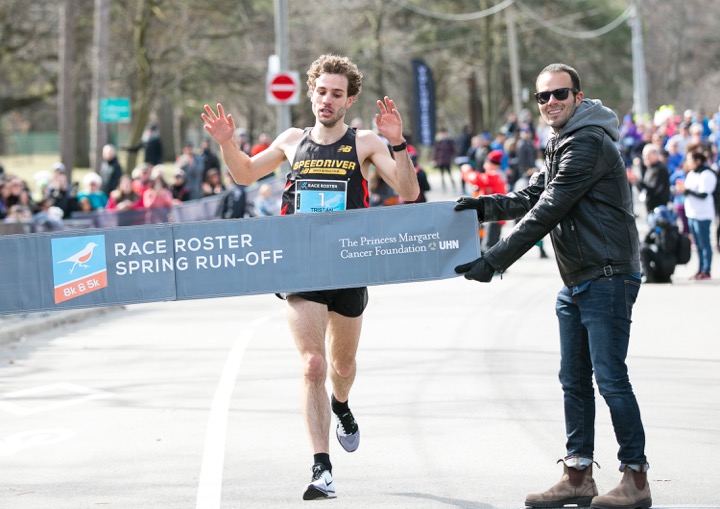
There was little surprise in the men’s race as Tristan Woodfine of Speed River Track Club crossed the finish line first as expected. But what the mass of spectators near the finish area could not have known was drama played out on the back end of the course during the first 2 kilometres. Woodfine had a technical issue.

Photo credit: Inge Johnson/Canada Running Series

“I was leading but my shoe came untied so I had to stop and pull over and retie,” he said with a laugh. “I was worried it would come off. A few of the guys passed me so I  then had to work hard to catch up again.

Woodfine led through the half way 4km point (12:08) with Sergio Raez Villanueva a couple of seconds behind.

“Probably around the 4km mark he actually caught up with me and we ran together from 6km until 7km then I put in a surge,” he revealed. “I could always hear him behind me. So I knew he was right there and it kept me honest.”

Woodfine’s winning time was 24:15 while Raez Villanueva was timed in 24:29. Kevin Tree took third in 24:59.

“I am very happy,” Woodfine said later. “It’s a hilly course, a tough course, so I wasn’t too concerned about a fast time. It was just go out and see where that leads me. It was a successful race. It was my first time here.”

Proceeds from the Race Roster Spring Run Off 8km go to the Princess Margaret Cancer Centre.

The next race in the Canada Running Series will be the Banque Scotia 21k de Montreal on April 23rd.

-30-

Complete results and photos:

www.springrunoff.ca


Run Barbados Marathon Weekend 2017

By | General | No Comments

 Come for the run, stay for the fun! 

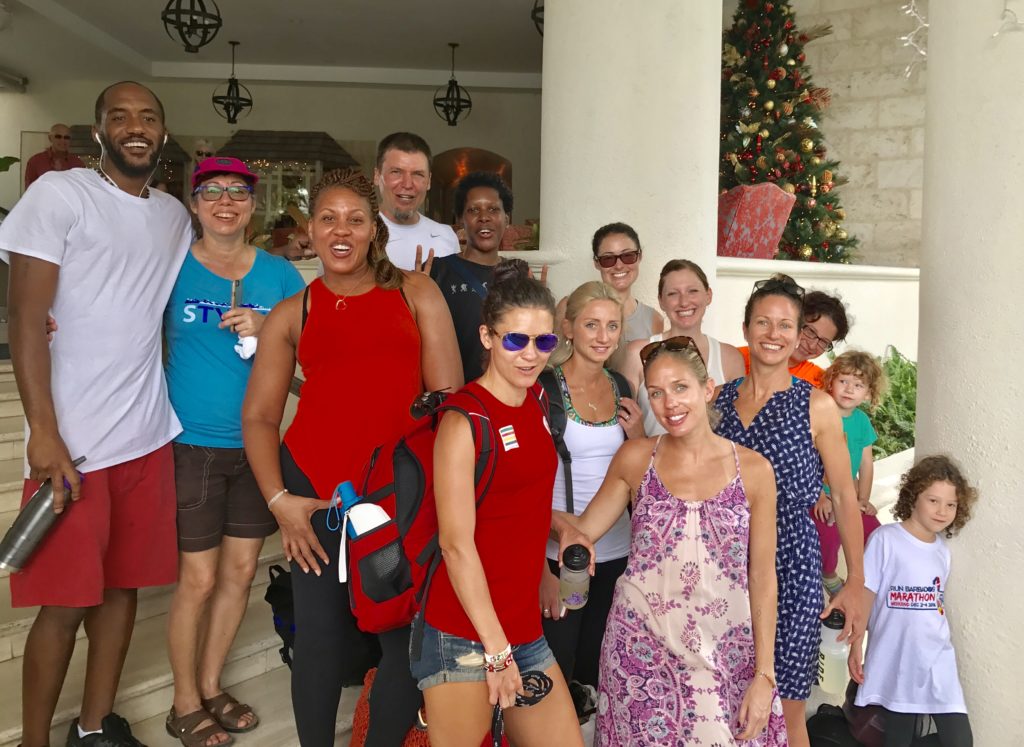
Join Lanni Marchant and Natasha Wodak on our Canada Running Series road trip to Run Barbados Marathon Weekend, December 1st – 3rd 2017. Join “Betty and Veronica” in the 10K, on the beach, for a few easy runs, and out on the town! It’s the ultimate CRS year-end reward!


We strongly recommend calling today as space is limited and will sell out at the group hotel.

Trip includes:

  • Round trip airfare from Toronto or Montreal via Air Canada.
  • 7 nights (November 30th – December 7th) at the fabulous 4-star Bougainvillea Beach Resort on Maxwell Coast Road.
  • Studio Room CAD$1418.00* per person based on double occupancy.
  • Junior Suite CAD$1568.00* per person based on double occupancy.
  • Transfers between airport-hotel in Barbados.
  • Prices quoted as of July 20th, may be subject to change. Space limited. Book early!

There’s a race for everyone: 1 Mile, 5K, 10K, Half-marathon, and Marathon, spread through Friday, Saturday and Sunday.

Race details: www.runbarbados.org

Then it’s time for the beach! Don’t miss our photo gallery from last year’s tour!


Booking:

To inquire about bookings, call Marge Folkes at Marville Travel 905-891-0111 or email mfolkes@marville.com.

For inquiries regarding the races email alan@canadarunningseries.com with “Run Barbados” as the subject.

Race details: www.runbarbados.org

Tips to Improve your Running Form

By | Training Tips | No Comments

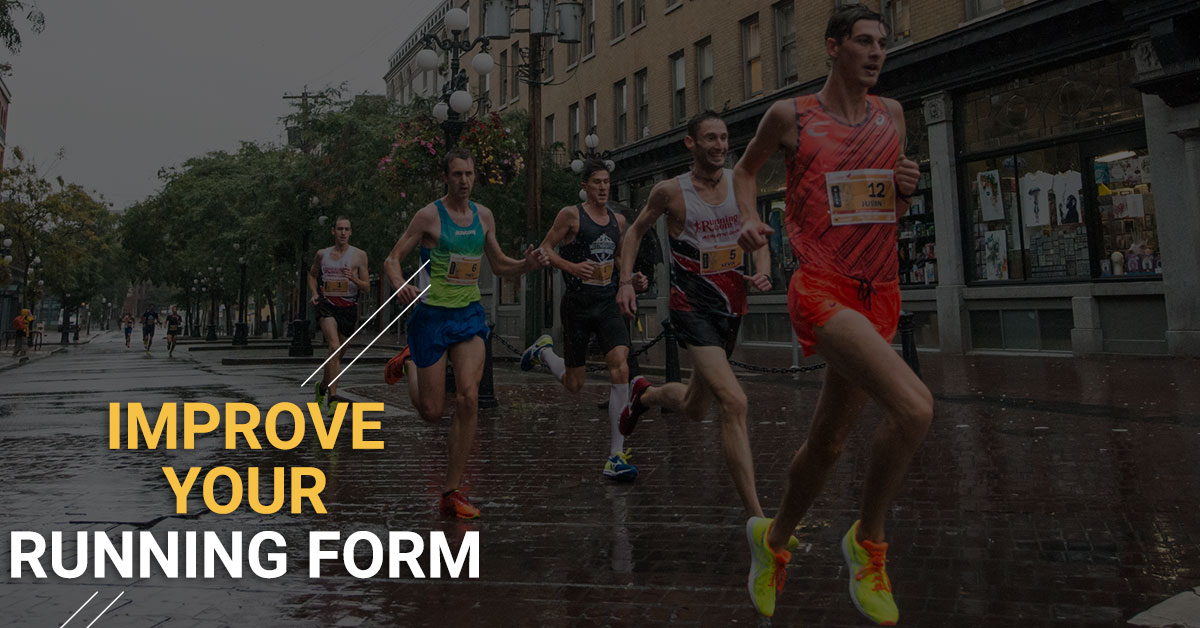
There are many ways to improve as a runner.  If you’re a beginner, getting out the door and having consistent training will make you a better runner by just going through the motions.  As you become more involved in the sport, you begin to make changes to training like incorporating speed work into your schedule, and maybe even seeking out a running coach to help you achieve your goals.  As time goes on, you begin to nitpick the details.  These details are typically part of one’s running form.  Don’t try and fix every issue at once; focus on one change at a time to create better running habits.  From head to toe, here are some things to consider:

Posture – Run with a slight lean forward that comes from the ankles, not the waist.  Bending from the waist, hunching your shoulders, or a slumped position of any part of the body can restrict circulation and reduce the oxygen supply your muscles crave.  You want to maintain a straight line from head to toe; try to maintain a forward lean of about 10 degrees.  To practice, lean forward until you feel like you’re going to fall, then go up onto your toes.  This posture will help gravity drive you forward while you’re running.

Head – Let your gaze guide you. Keep your head looking straight ahead at the horizon, and try not to lean your head back or jutted forward as this can put excess tension/stress on your neck.  Your head position is the starting point of your entire body’s positioning.

Shoulders – Keep your shoulders low and loose.  A lot of runners have a tendency to let their shoulders creep up towards their ears, especially as they get tired.  If your neck gets sore and you feel there’s tension in your shoulders/neck, it’s probably due to keeping your shoulders in a shrugged position.  Shake your arms outs when this happens to remind your upper body to relax.  Tension anywhere in the body will make you less efficient.

Arms – Running is a lower body dominant activity, but your arms move in conjunction with your legs and are a critical part of proper running form.  Keep your arms and hands relaxed, and don’t clench your fists.  Pretend you’re running with a raw egg in each hand that you don’t want to crush.  Keep your arms bent at a 90 degree angle and swing your arms forward and back between your waist and lower chest.  Avoid too much cross-body movement.

Torso – As mentioned, it’s important to keep your back straight, without any exaggerated curvature in your spine.  Keeping your shoulders relaxed and your head looking straight ahead will help maintain an upright position.  Think of it as “running tall”; stretch yourself up to keep your whole body in alignment.  It’ll also help keep your lung capacity at it’s maximum.

Hips – Your hips are your centre of gravity.  While in a slight forward lean, it’s important to remember not to lean forward by bending from your hips.  Doing so will restrict your leg movement/knee drive.  Hunching over, or leaning too far forward will throw your body out of alignment and can put additional pressure on your lower back.  If you finish long runs with a sore lower back, this is a key posture component to work on first.

Legs/stride – Following the rest of your body, your legs are your driving force.  Keeping a slight forward lean will allow for optimal knee drive, and consequently more leg power. Over-striding occurs when you run too upright, reach your legs out ahead of your body, or land with a straight leg rather than a slightly bent knee. Instead, aim to keep your feet under you, not in front of you; and land with your knee slightly bent to absorb the impact of hitting the ground.  Overstriding can put your hamstrings and knees at risk of injury, or cause shin splits.  Try to increase your cadence in order to shorten your stride enough to have your feet underneath you.

Ankles/feet – While running, try to step quietly without slapping your feet onto the ground.  Aim to land in the area between your heel and mid-foot, then roll forward to toe off and into your next step.  You’ll be able to feel your calf muscles working at each push-off.  The ankle will be slightly flexed to provide more force to each toe-off.  Two words to describe good running form are springy and quiet.

There are many video resources on the internet that have great drills for improving your running form.

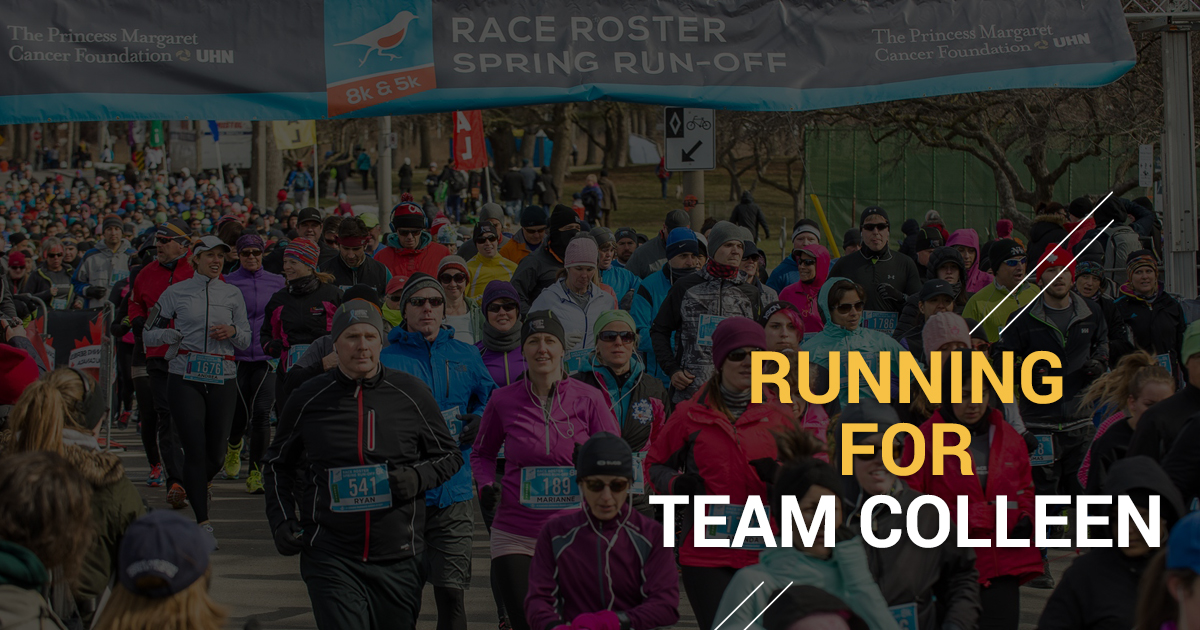
Running for Team Colleen at the Race Roster Spring Run-Off

By | Charity, Race Roster Spring Run-Off | No Comments
By: Amy Friel 

For Jordan Milchman, signing up for the Race Roster Spring Run-Off was supposed to signify a long-awaited return to running after a year beset by injury.

Milchman, who completed his first-ever half-marathon two years ago at the Scotiabank Toronto Waterfront Marathon, spent the better part of 2016 dealing with a persistent back injury. By January of this year, a newly-recovered Milchman started looking at goal races for 2017.

With its notoriously challenging course winding through the hills of High Park, the Race Roster Spring Run-Off looked to him like the perfect tune-up on the road to a spring return to the half-marathon distance.

“I’ve never done an 8K before,” Milchman explains. “So I thought, I’m automatically gonna set a personal best.” Excited by the prospect of racing again, he signed up.

Two days later, things changed, when Milchman’s colleague and longtime friend Colleen Liao was diagnosed with cancer.

Liao, who Milchman describes as “my coworker, my buddy, and one of the best people I know”, is no stranger to the disease. Four years earlier, shortly after Colleen and her husband Len learned that they were expecting their first child, Liao was diagnosed with stage three breast cancer.

“Colleen is a certified badass,” Milchman says of his friend, who underwent a lumpectomy at 12 weeks pregnant, followed by chemotherapy at 22 weeks.

Her body responded well to the treatment, with Liao receiving the much hoped-for “all clear” from her doctors shortly before the birth of her son, Chase. Newly cancer-free and relishing life as a new mom, Liao returned to work, where she and Milchman became fast friends, bonding over a shared irreverent sense of humour.

“We always found each other funny,” he recalls of their early days working together. “We laughed a lot.”

So when his friend learned early this year that her cancer had returned, Milchman decided to enter the Race Roster Spring Run-Off to support Liao.

Along with a few friends, Milchman switched his individual registration to a charity entry and began fundraising as the captain of “Team Colleen”. And though the team’s goals were modest at first, the response to their cause has been anything but.

“When we started out, our team goal was $3,000,” he recalls. “I think we hit that on the first day. A lot of people have been quite generous.”

Donations to Team Colleen benefit the Princess Margaret Cancer Centre, a global leader in cancer research, and one of the largest comprehensive cancer treatment facilities in the world.

With less than two weeks until race day on Saturday, April 8th, Team Colleen has now raised more than $8,000 and counting towards their revised $10,000 goal. Looking over the list of individual donations, Milchman notes that much of it has come from fellow friends and colleagues who, like him, have been touched by Liao’s enduring tenacity and indomitable spirit in the face of what appear to be increasingly long odds.

For her part, Liao has chosen to focus on spending time with her husband and three-year-old son since her rediagnosis, prioritizing her health, family, and happiness as much as possible.

“Colleen is a very strong person,” Milchman says. “She’s very positive, very upbeat. She knows what’s coming, but she just stays very positive.”

Her outlook has had a ripple effect. With friends, colleagues, and strangers alike throwing their support behind Team Colleen, donations in support of the Princess Margaret Cancer Centre continue to pour in. It’s a momentum that Milchman hopes will continue right up to race day, and beyond.

“We have all been connected to cancer in one way or another,” he says. “We’re doing what we can to ensure we never have to encounter it again.”

To support Team Colleen and the Princess Margaret Cancer Centre, or to get involved with fundraising, visit their fundraising page.

Support Team Colleen: http://runcrs.co/2o7R9Ra 

Make a general donation to the event: http://runcrs.co/2nh6OsG 

We thank participants for raising money for the Princess Margaret Cancer Centre and look forward to seeing you at the Race Roster Spring Run-Off on April 8th.

Registration is still open at http://springrunoff.ca

#ScotiaHalf 2017 Charity Profiles

By | Charity, Scotiabank Vancouver Half | No Comments

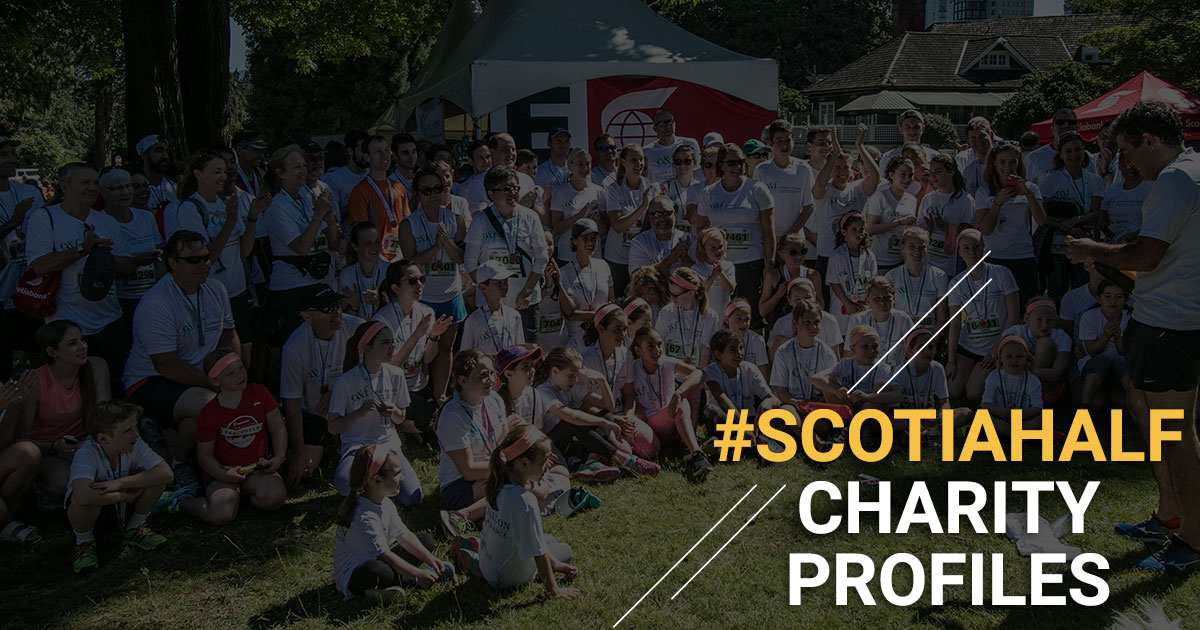
Over the next few months we’ll be profiling some of the amazing charities involved with this year’s Scotiabank Vancouver Half-Marathon & 5k along with some of the great work they do. This week, we spoke to the Royal Columbian Hospital Foundation.

Want to get involved? Find out more about the Scotiabank Charity Challenge here!


Royal Columbian Hospital FoundationRoyal Columbian Hospital Foundation

Royal Columbian Hospital Foundation is Pounding the Pavement for Preemies!
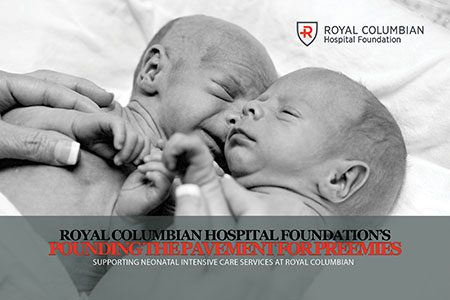

We are working together with friends and family to fundraise for the Neonatal Intensive Care Unit. This year our goal is to raise $88,000 to fund the remaining balance of our Infant Transport Incubator. An Infant Transport Incubator is a self-contained, mobile, intensive care unit for sick or premature babies to be transported to a neonatal intensive-care unit for specialized treatment.

The Van Marrewyk family experienced first-hand the exceptional care from the RCH Hospital after the birth of their triplet daughters in 2010. Wanting to give back, they organized an annual 5km walk for family and friends that also acted as a fundraiser for the neonatal intensive care unit (NICU) at Royal Columbian Hospital. Those Christmastime walkathons raised $110,000. As the family and the Foundation discussed future fundraising efforts, we all saw an advantage in joining the Scotiabank Charity Challenge. We caught up with the Van Marrewyk’s about their involvement, their goals and their story:

How/why did you decide to use the Scotiabank Charity Challenge as a big fundraiser instead of continuing with the walk you’ve put on in the past?  Do you still put the walk on as an annual event? 
This option was brought forward to us by the RCH Foundation.  The biggest reason that we joined forces with both the RCH foundation and Scotiabank Charity Challenge was for ease and exposure.  This fundraiser was never about our family it has always been about the NICU.  When we did the walk it was located in Ladner and it was difficult to bring the entire NICU community to us so it was always more of a family and friends event.  Now the event has been able to reach more of just the NICU community and that was ultimately what our family wanted.  Our dream was to raise awareness about the NICU and give the NICU families a place to come together and celebrate our miracles that have come through the NICU. 
We do not still do the walk, like everyone these days we are a busy family and the walk consumed roughly 6-8 months of our year trying to plan, execute the walk, and then finally send out all of the thank you’s.  We know how much goes into an event like this and for the foundation to take this work off of our plate has been amazing for us.  The RCH Foundation is truly the backbone of why this fundraiser has continued.

Royal Columbian Hospital FoundationWhat made you become so involved with the RCH Foundation?  I’m sure many families have been helped through their care, but what made you decide to give back over the years? 
Without the NICU we would not have our family of 6.  Our children were very sick when they came under the care of Dr. Al-Mudaffer of the NICU.  He and his team (doctors and nurses) made sure that they would find the answers of why the kids were so sick and he did.  The RCH Foundation was our avenue to ensure that our money made it back into the RCH NICU’s system.  They have been absolutely amazing in their tireless work and continue to exceed all of our expectations.  They always make things happen and always looking our for not only the hospitals best interests but also the families of the patients.  They make things happen!

Where does the money that’s fundraised go to every year? Is it based on the needs of the neonatal unit? 
Queenie (NICU Manager) still allows us to choose where this money goes.  Every time we start a new year we are given a few choices and the monetary amount of the items that we are discussing.  The current focus is an Infant Transport Incubator. Before this, we raised money to purchase a jet ventilator, which provides a gentle and effective mode of ventilation to help the most fragile premature babies breathe, since their lungs are not developed enough for them to breathe on their own. We’ve also purchased infusion pumps that deliver fluids and medications as well as a couple of isolette incubators.
The Incubator stretcher that we are currently still working on has been a special piece of equipment because we have an agreement with the hospital that we will continue to raise funds for this piece of equipment (forecasted 3 years) but the piece of equipment has already been purchased.  The hospital is paying for this piece of equipment and we are paying them back, what an amazing relationship!

When you sign up for the Scotiabank Vancouver Half-Marathon or 5k, you can choose to run for the Royal Columbian Hospital Foundation in the Scotiabank Charity Challenge. Already registered to run? You can join their fundraising team today or make a donation to their team.

Dr. Peter AIDS FoundationDr. Peter AIDS Foundation

The Dr. Peter Centre is a leader in providing HIV care for individuals who face complex social and health issues, including mental illness, addictions, poverty, homelessness and social isolation.

Located in Vancouver’s West End, the Dr. Peter Centre provides three programs – day health, 24-hour specialized nursing care residence, and enhanced supportive housing, which together form a campus of care with integrative HIV services supporting personal autonomy and effective use of health care resources.

Now in our 8th year, staff and volunteers of the Dr. Peter AIDS Foundation form the “Red Ribbon Roadrunners” and run in the Scotiabank Charity Challenge to fundraise. Our team runs not only for fitness, but also to support compassionate care for people living with HIV.

We chose the Scotiabank Charity Challenge as one of our yearly fundraisers because it is a world-class race that provides a seamless platform that allows us to focus our efforts and resources on fundraising. It is also a great way to meet new people, get in shape, and have fun!

The Red Ribbon Roadrunners participate annually in the Scotiabank Half-Marathon and 5k in support of the life-changing work of the Dr. Peter AIDS Foundation. Every contribution makes a difference. When you run, walk or pledge on behalf of the Dr. Peter AIDS Foundation, you help provide vital care for people living with HIV.

Our food and nutrition program is the cornerstone of our model of care. Every day in the day health program, nutritious breakfasts and lunches are served, providing the high level of nutrition needed for a person to fully benefit from HIV treatment and to bolster the immune system.

In our day health program, a meal is so much more than a meal – it’s THE draw for engagement in HIV treatment and other HIV care.

Our goal is to raise $5000, enough to fund 1000 meals at the Dr. Peter Centre!

Dr. Peter AIDS FoundationWhen you sign up for the Scotiabank Vancouver Half-Marathon or 5k, you can choose to run for The Dr. Peter AIDS Foundation in the Scotiabank Charity Challenge. Already registered to run? You can join their fundraising team today or make a donation to their team.


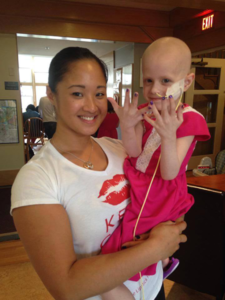
lipstick-projectThe Lipstick Project

The Lipstick Project is a small, Vancouver-based non-profit that provides free, professional spa services to men, women and children who are facing significant health challenges. Through partnerships with organizations like Ronald McDonald House, Canuck Place Children’s Hospice and the Vancouver Hospice Society, our volunteers deliver comfort, dignity and compassionate care to those in need. We’ve never participated in the Scotiabank Charity Challenge before and are really looking forward to engaging our community in this new way this year!

lipstick-projectWe chose to participate in the Scotiabank Charity Challenge because it is an event that such a diverse group of our community can participate in. Because volunteering with our organization requires a very specific skill set, there are lots of supporters and fans in our community who can’t volunteer with us. This event is a great way to engage our entire community and rally them around a specific cause.

People can run for our charity by signing up here and joining our team. We’re very excited to make this a community-building event that is much more than just on race-day. That’s why we have partnered up with Rackets & Runners’ run club for training sessions on Tuesday and Thursday evenings and Saturday mornings. We also have an active Facebook community where we’re posting training tips, gear info, stretching videos, and different tidbits to help people make the most of this experience.

The funds raised will help us continue our programs and services in the coming year. We’re also always hopeful to expand the reach of our organization to serve more people, and success in this fundraising endeavour would help us to bring those expansions to life.

When you sign up for the Scotiabank Vancouver Half-Marathon or 5k, you can choose to run for The Lipstick Project in the Scotiabank Charity Challenge. Already registered to run? You can join their fundraising team today or make a donation to their team.


Check back next week – we’ll be talking to another one of our great charities! You can find the full list of our partner charities here.

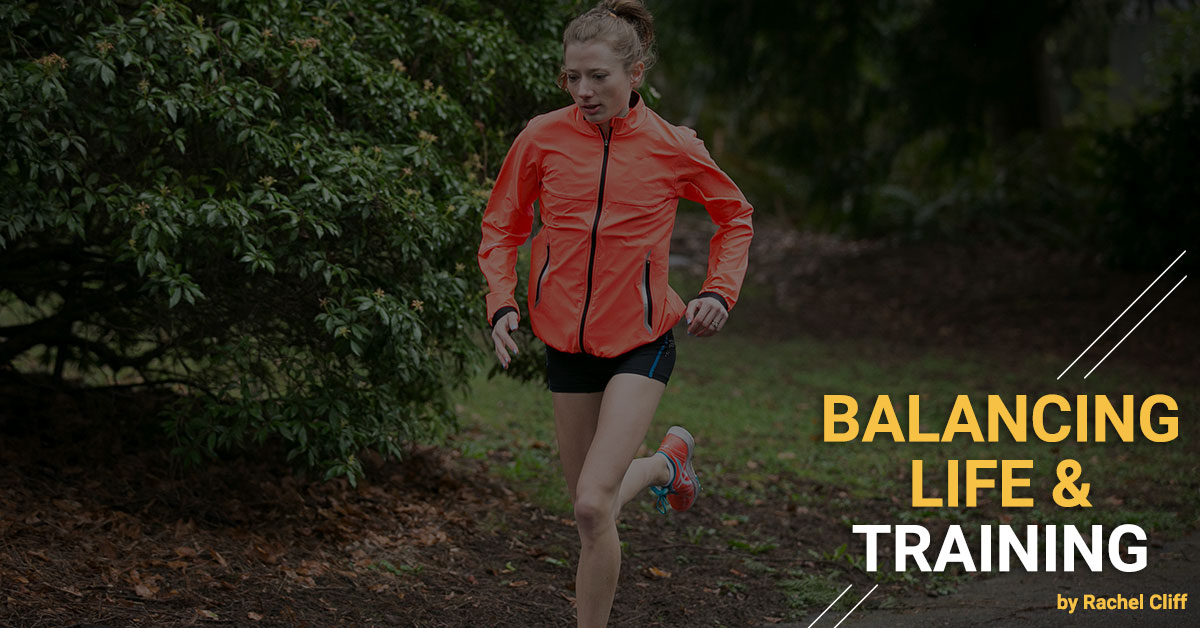
Balancing Life & Training

By | Elite Athletes | No Comments
by Rachel Cliff (@Dangerous_Cliff)

Many people struggle to perfect a healthy balance between work and life; this can become even more challenging when you add an athletic goal to the mixture. Five years ago I decided to push for the impossible: to qualify for the Olympic games. With a personal best over 50 seconds off the standard I knew this was a serious long shot, and if I was going to pursue it, it was critical that I keep my professional development in mind as well.

Since then, I have moved to being an elite Canadian runner while completing my MSc in Occupational and Environmental Hygiene and have been working as a research assistant since October 2016. This journey hasn’t been easy, and there have been times when my running may have suffered from inadequate sleep and academic stress, and other times when my academics may have fallen behind (i.e. taking a bit longer to complete my thesis). Through trial and error I have learned to balance having both athletic and career goals and to be thankful to have both avenues in my life. Here are a few tips I’ve learned along the way:

Find a flexible employer and earn their trust: It’s best to find a manager who not only supports your athletic goals but offers some flexibility in scheduling and, ideally, is more focused on deliverables than whether you are sitting at your desk from 9-5pm (within reason). Runs and workouts often need to be completed during these hours, especially in the winter months so having someone who’s okay with you taking a longer lunch break to do your run, arrive a bit later or leave early is very helpful. All that said, flexibility of hours does not mean flexibility of deadlines, and it’s critical to demonstrate that you can complete assignments when asked. If your job is shift work by nature then try to be flexible in when you exercise and not sweat the small stuff: such as running or biking to work or wearing reflective safety gear and finding a safe running route for after dark are all options. Transparency is always key. There should be open communication about your goals and the needs of your employer.

Be organized: My most productive weeks happen when I plan in advance. On Sunday I’ll sit down and write out how to fit training goals around my work schedule and vice-versa. First, identify critical meetings and workouts that need to occur at certain times and then secondly write out all other weekly goals and put the puzzle together. Once your schedule is made it can be helpful to re-visit this to-do list before going to bed each night. Use your weekends to cook and prepare breakfasts, salads and snacks for the upcoming week.

Focus on quality: While it’s typically okay to brainstorm work ideas on your easy runs, there are times when one task requires absolute focus. Ideally, I aim find 15 minutes to unwind before a workout and go over the training goals. If there’s no time for this I try to use my warm-up to focus and avoid talking or thinking about anything other than running. The more focused you can be for your workout, the better quality it will be. Execute a similar strategy at work; limit procrastination and aim to produce high quality work as efficiently as possible.

Prioritize goals: If you’re at a critical stage of your career, your athletics may have to go on the back burner for a bit. Alternatively, if there’s a once in a life-time race or goal on your radar, you may need to decrease the hours you work. Adjust your goals accordingly and be aware that one may need to take priority over the other. For example, I did not work last summer while I was chasing my Olympic dream, but when I started up at my new job this fall I only ran once a day while I got used to a 37.5hr work week. I try to think of it as crop rotation.

Take care of yourself: No matter how big your goals are, your sleep, nutrition and mental health should always come first. Aim to eat good food, and get enough sleep so that you’re not wrecked at the end of the week (8-10 hours depending on the person). Also, take a few nights off to see your friends, watch a movie or do something else that makes you happy. Extreme stress is manageable for only a short amount of time, and just like over-training, prevention is the best policy when it comes to burn out (trust me, I’ve done it!!). Pay close attention to the symptoms of burnout and remember, there’s only 24 hours in a day and you’re only human.

Whether your fitness goal is to complete your first half marathon, or qualify for a Canadian national team, I feel these tips can apply to everyone looking to balance their career with any athletic goal. I realize not all jobs allow for flexibility in your work schedule, so keep your athletic goals in check with how much time you can realistically devote to them. The most important part is to have fun and be inspired by your running goals.