Avoiding the post-race blues

By | General | No Comments

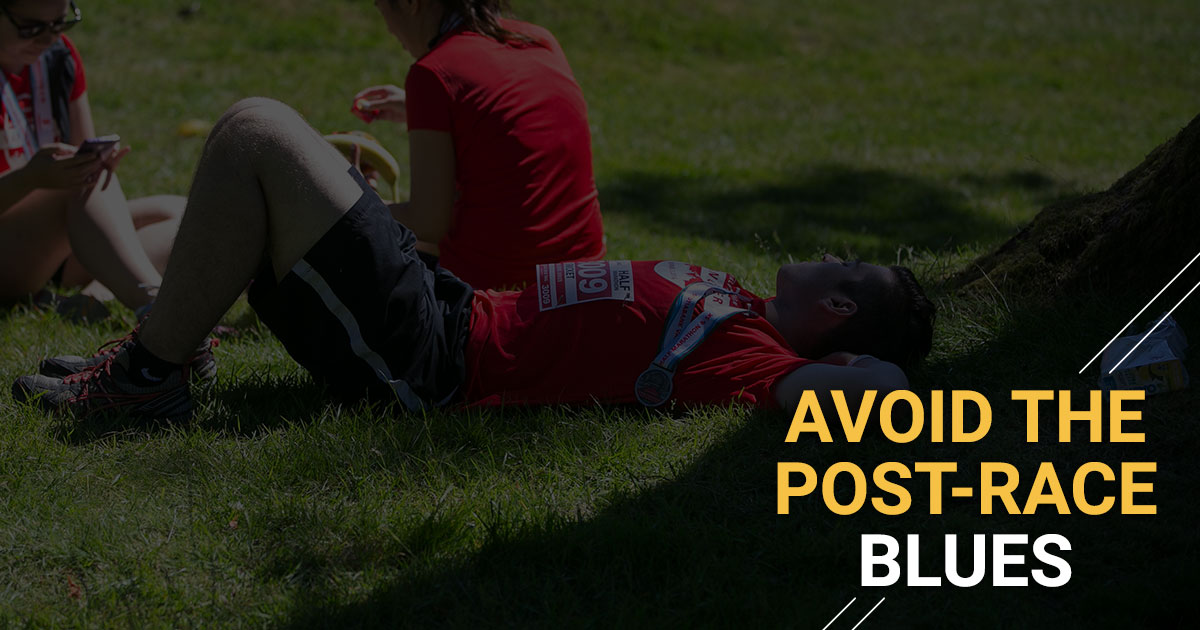
Post-race blues are commonly experienced after any big goal has been accomplished.  From running your first 5k, to obtaining the elusive Boston Qualifying time, there’s a lot of time and effort that goes into the buildup for a race.  The same questions bounce around in everyone’s head: “What now?”; “What’s next?”; and “Do I want to do this again?”.  Similar thoughts and feelings are experienced when a race is unexpectedly cancelled.  All the hard work and effort that was focused on this one event can feel as if it was all for naught.  So when a race doesn’t go according to plan due to poor pacing, subpar weather conditions, or injury, it leaves people disgruntled, especially when it’s something out of their control.  If this is something that sounds familiar, here are a few ways of getting over the post-race blues:

  1. Debrief.  After any race, it’s always a good idea to go over the pros and cons from the race.  Start by listing off the good things that happened as it’s instinctive to leap onto what went wrong.  When analyzing the problem areas, you’ll learn about what did work, how to rectify any problem areas, and what you can do to improve next time around. Write down these notes, and visualize how to make the next training cycle better, faster, and more fun for smoother sailing into the next event.
  2. Set a new goal. Once a race is said and done, it can be hard to find the motivation to run again. Having just put your body through months of training, your body requires ample recovery time post-race and this is the ideal time to set a new goal.  There are so many great races throughout the year that signing up for a race in a different distance, city, or sport is an easy way to keep the training momentum going.
  3. Mix it up. After debriefing, the dos and don’ts that were experienced can spark some training changes when building to the next race.  Incorporate different training regimes like spin classes, strength sessions, and swimming, or find a group to train with that may provide new ideas for different running routes and workouts.  By keeping training fun and exciting it helps to keep the motivation up, and the blues at bay.
  4. Keep things in perspective.  Things typically happen for a reason. The reason may be unclear initially, but when you look back down the road there are things that point out why something did or didn’t work out as you had planned.  It’s important to remember that although sacrifices are made to execute a training cycle properly, there is a lot more to life than that one race.  This isn’t meant to downplay any goal that’s been achieved, big or small, it’s just a way to keep it in perspective.  At the end of the day, friends and family will be cheering and supporting you no matter the outcome; there will always be another race to sign up for, and you’ll have learned something about yourself that you didn’t know before the journey began.

Post-race blues are likely, but not inevitable.  Keep moving forward, sign up for your next event, and keep that training routine rolling!

Looking for your next event? Find the next Canada Running Series event near you!
Council for Responsible Sport – Inspire Certification

By | Scotiabank Vancouver Half | No Comments

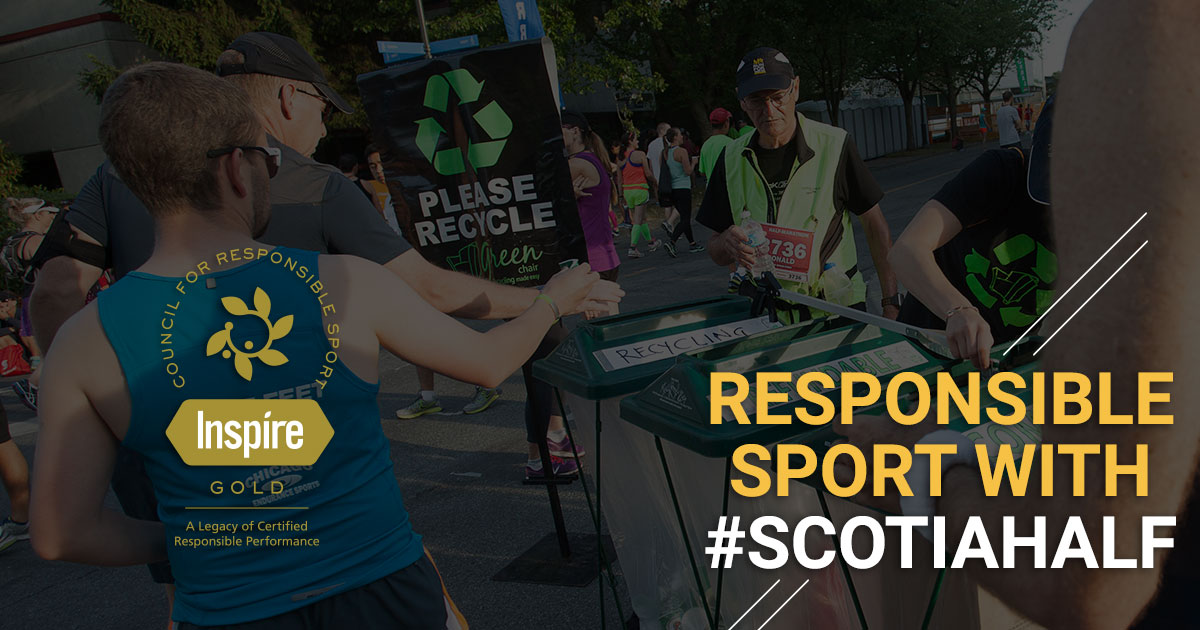
Canada Running Series has a longstanding commitment to producing sustainable events in our community and is excited for the Scotiabank Vancouver Half-Marathon & 5k‘s invitation into the Council for Responsible Sport‘s Inspire program! The new Inspire program recognizes the sustained commitment of events that have been certified multiple times and challenges them to mentor industry peers and share their stories. The Scotiabank Vancouver Half-Marathon & 5k is the fourth event to earn Inspire status and the first to do so in Canada. It is the second event to earn Inspire status at the Gold level.

“The Inspire program grants events and organizers with proven records of hosting certified responsible events a position of exemplary leadership within the community of organizers positively influencing the sports events industry,” said the Council’s managing director Shelley Villalobos.

“We are pleased to welcome the Scotiabank Vancouver Half-Marathon & 5k to the Inspire program this year. We hope to elevate the level of attention to the exemplary work organizers have been doing for several years now with regards to zero waste, procurement, access, and community legacy at the event.”

Highlights of achievements in the past include:

  •  98% Waste Diversion Rate for our Expo, Start Area, Finish Area, and course with Green Chair Recycling
  • All discarded clothing from Start Area collected and donated to shelter programs
  • Majority of food purchased is locally and/or organically produced, with surplus food being donated to local food banks
  • Striving for Carbon-Neutral – all event operations and 50% of local participant travel was offset with carbon credits in 2015
  • Free post-event shuttles and bike valet reduce two-way trips and car drops
  • Marketing materials are printed using biodegradable inks on FSC certified paper

In 2017, the Scotiabank Vancouver Half-Marathon & 5k will expand upon these achievements by replacing all generators at the start/finish venues with pollution-free power stations and solar panels. Recycling and waste reduction initiatives will continue to be fine-tuned and the event will expand upon the bike valet program in Stanley Park.

Events may opt into the Inspire program on an invitation only basis after earning two consecutive certifications from the Council (certification is good for two years). The Scotiabank Vancouver Half-Marathon & 5k earned an invitation in 2017 after first becoming certified in 2013 at the Silver level, and earning a recertification at the Gold level in 2015. Program participation entails three core requirements including annual reporting on key performance indicators, mentorship of another event or organization on a specific aspect of their responsible sport programming and sharing the event’s responsible sport story publicly.

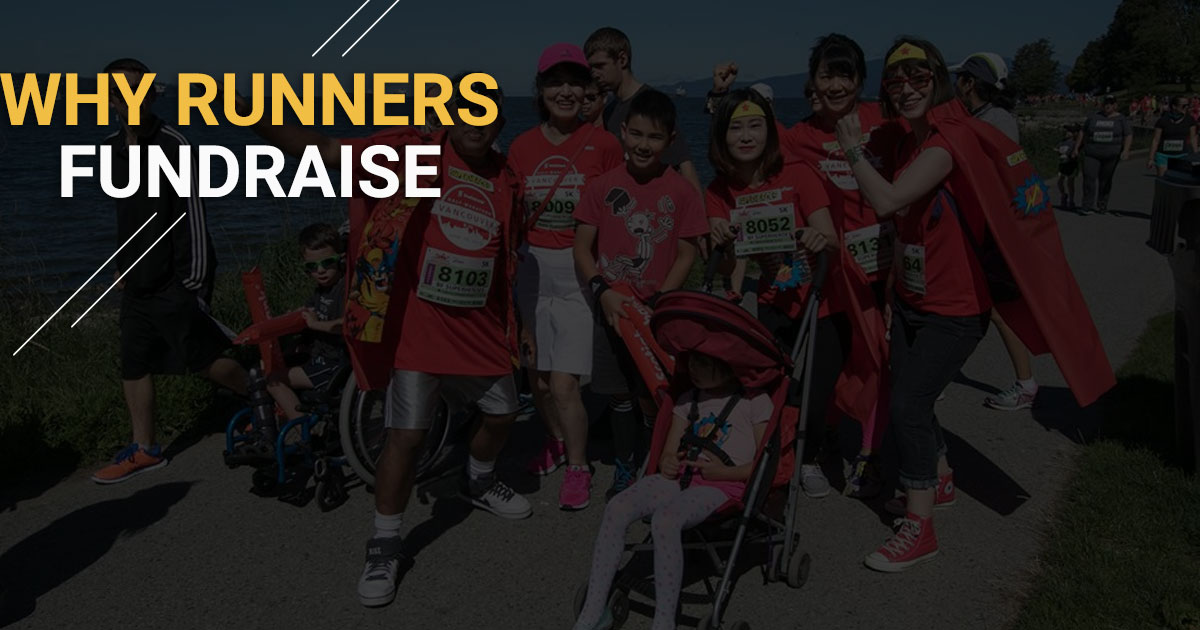
Why Runners Participate in Event Fundraising

By | Scotiabank Charity Challenge, Scotiabank Vancouver Half | No Comments

The Scotiabank Charity Challenge supports over 80 different charities each year through the Scotiabank Vancouver Half-Marathon & 5k. Each charity has a unique story and background for how they were founded and came to be a part of the Scotiabank Charity Challenge. The Royal Columbian Hospital Foundation is just one of these stories and they have been a huge part of this event for many years as they fundraise for the neonatal intensive care unit (NICU), largely in part to the Van Marrewyk family.

The Van Marrewyk family experienced incredible care for almost two months at the Royal Columbian Hospital (RCH) NICU after the birth of their triplet daughters. Their appreciation led to the establishment of an annual 5k Christmas-time walkathon for friends and family in support of the NICU at RCH that raised over $110,000. Wanting to further their fundraising efforts, the Van Marrewyk’s and the RCH Foundation saw the advantage of the Scotiabank Charity Challenge and decided to take part. The RCH Foundation has raised over $125,000 since 2013 with the focus being on supporting neonatal care.

Making every step count is more than just participating in the event. The Charity Challenge program allows participants to run for the sake of others. Runners and walkers are given a unique opportunity to band together and fundraise for local charities of personal significance, creating a more meaningful race experience. The social aspect of a race is greatly enhanced with the camaraderie between friends, family, coworkers, and like-minded people as they work towards supporting their chosen charity. Helping the greater good is incredibly motivating, especially when individuals set personal goals for both their own race and their fundraising targets through their support both physically and financially.

In the Scotiabank Charity Challenge, Scotiabank covers all of the fees associated with online fundraising, allowing 100% of the funds that have been raised to go directly to the charity of your choice. Over $50 million has been raised nationally through the Scotiabank Charity Challenge from thousands of people running or walking in honour of loved ones, or to simply raise awareness and give back to their community.

No matter what distance you take part in or what amount you raise, your contribution makes every step count for charities in our community.

To take part in the Charity Challenge, sign up as part of a charity team when you register for the Scotiabank Vancouver Half Marathon & 5k today! A list of current charities is available here with more being added every week.

Intro to Foam Rolling

By | General | No Comments

Foam rolling is well-known in the running world, and for good reasons. Essentially it’s like having a personal massage therapist at home, that can benefit your running in so many ways. Training and hard workouts can cause little tears in your muscles that then rebuild to make muscles stronger. Sometimes these adhesions bunch together forming knots that can limit the movement of the muscle, thereby putting it at risk of injury. Foam rolling can help to break down these knots and return your muscle to full function. Rolling isn’t limited to the rehabilitation of injured muscles; it can be a beneficial tool in every aspect of training:

  • Boost your workout.  Maintaining fluid muscles contractions can enhance their mobility, range of motion, and improve posture while sitting, standing and moving around.  Improving general muscle function will translate into better workouts by having the muscles function at their full potential.  Foam rolling as part of warmup will helps to prime the muscles for the workout by increasing blood flow to the muscle and reducing muscle tightness that could negatively affect running form.
  • Reduce muscle soreness. We’ve all be victims of delayed onset muscles soreness (DOMS) which is the pain and stiffness in muscle that occurs from lactic acid buildup after hard workouts or an activity your body isn’t accustomed to.  Incorporating foam rolling into your cooldown can help to increase blood flow to the muscle, flushes out leftover lactic acid, primes the muscles for light stretching and helps your muscles repair.
  • Prevent injuries.  A lot of running injuries can come from having tight muscles that pull on joints and cause imbalances.  Rolling before a workout can help to remind the muscle to relax and reduce any compensation from excessively tight muscles.  Plus it’ll ensure that all the proper muscles are being used throughout the activity.

When using a foam roller, these are some general tips to keep in mind:

  • Roll back and forth over the targeted area for 30-60 secs.
  • If there is an exceptionally tight spot (aka a trigger point), work on the knot/adhesion then move onto a different area.  Return to the original tight spot to work on the muscle once it’s had a chance to relax.
  • Refrain from rolling over bony areas such as your knee caps.
  • If you have an injury, be cautious rolling over the affected area.  Too much direct pressure could worsen the issue.  Instead roll the areas around the injury to help loosen the surrounding muscles.
  • “Hurts so good” sensations are acceptable, but any pain that causes you to wince is best to avoid.

Here are the top 5 areas for runners to roll and how to do it:

  1. Quads:
    1. With both quads on top of the rollers, support your weight with your hands on the floor.
    2. Utilizing your arms for leverage, move the roller up and down the entire length of the quads being careful to avoid the kneecaps.
  2. Calves:
    1. Place both calves on top of the rollers and place your arms behind you to support you in a seated position.
    2. Move your hips back and forth to move the roller along the length of your calves.
  3. Hamstrings:
    1. Either place both hamstrings on the roller, or for a more intense roll cross one leg over the other with the roller under the lower hamstring.
    2. Using your arms as leverage, move your hips back and forth (similar movement to when you roll your calves) to move the roller along the entire hamstring.
    3. If doing one leg at a time, switch sides and repeat.
  4. IT Bands:
    1. Lying on one side, rest your hip on the roller.  Using your arms to support you, bring the opposite leg into a position that helps support your body weight.
    2. Slowly move your body along the roller around where the seam on the outer side of your pants would be.
    3. If it’s especially tender, don’t roll directly on the IT Band and focus on rolling the outer edges of your quads and hamstrings by slightly tilting your body forwards/backwards on the roller.
    4. Switch and repeat on the other side.
  5. Glutes:
    1. The glutes are a big contributor to injuries in runners.  Essentially using the same form as the IT Band, place one butt cheek on the roller and move it back and forth from the hip into the quad/hamstring region.
    2. Switch and repeat on other side.

Useful videos on technique can be found on YouTube for further guidance.

Habits for a Better Morning Workout

By | General | No Comments

Not all of us are bright-eyed and bushy-tailed first thing in the morning, and even those who are need a little planning to jump into a workout as soon as they’ve stepped out of bed. Rolling out of bed to a hot cup of coffee and breakfast sounds much more appealing than lacing up your shoes and heading out into a cold, dark morning. However, research shows there are many physical and psychological benefits to working out first thing in the morning: increases metabolism which keeps calories burning throughout the day; promotes endorphin release in the brain which improves your mood, positively starting your day; provides a sense of accomplishment knowing you’ve finishing training before the workday begins; and it can increase mental capacity allowing you to be more productive throughout the day.

If you’re someone who struggles with morning workouts, here are a few tips that can make it easier:

  1. Prep and plan: if you know it’s going to be a battle getting out of bed, have your clothes laid out, your music uploaded and iPod charged, and any extras you may need (credit card, gym membership, equipment etc.). This will eliminate any frantic hunts for your favourite shorts or headphones and will get you out the door in a jiffy.
  2. Set an alarm, or maybe two: There are several ways to ensure you actually get up in the morning. If setting one alarm isn’t enough, set two. Light alarms that gradually brighten the room as the scheduled wake-up time approaches are far less annoying than a blaring alarm clock. However if those are too passive, go for setting an alarm that is placed far enough away so that you’d have to get out of bed to turn it off. It’s easier to stay out of bed once you’re already up!
  3. Drink up: The average person sleeps about 7 hours per night, which is a long time to go without drinking any water. Water loss occurs during sleep through every exhalation, so get into the habit of drinking a glass or two of water as soon as you get up. Even the slightest bit of dehydration can reduce exercise performance. Be sure to drink up before, during and after your workout. For vigorous workouts, add some electrolytes into your water to help retain water in your system when you need it most.
  4. Eat something: It’s important to eat some kind of food prior to a workout. Typically you haven’t eaten for 8+ hours, so consuming a carbohydrate- and protein-rich snack/meal is ideal. Opt for slow releasing carbs like oatmeal, whole-grain toast, or an apple and pair it with a protein source such as eggs, Greek yogurt, or nut butter. Try not to consume too much fat before a workout. Some nuts or avocado is great, but no greasy bacon breakfast sandwich otherwise your interval session will be runs between bathroom stops. A proper combination of macronutrients will stabilize your blood sugar levels and be a great fuel source before intense exercise.
  5. Warm Up for a little longer: No matter how much you move around while sleeping, it’s not enough to leap out of bed and start a workout immediately. A longer warmup is necessary for a few reasons: it primes your nervous system for higher levels of energy exertion; it increase mental acuity; it loosens and lubricates your muscles and tendons; it increases your heart rate, respiration rate and oxygen delivery to working muscles. Incorporate some lower back exercises as well for increased mobility and stability, especially if you’re prone to back stiffness.
  6. Consistency is key: Waking up early and getting your workout done early becomes easier the more often you do it. Turning this into a positive habit that can be maintained throughout busy work weeks and everyday life is beneficial when time is limited and you want to continue working towards your goals.

Cold Weather Training Tips

By | General | No Comments

Snow and temperatures well below freezing levels aren’t typically found in a Vancouver winter.  We west coast folks are blessed with rain and temperate conditions, so when Mother Nature decided to throw a real Canadian winter at us, it sent the running population into a frenzy.  Combine the frigid temperatures with minimal daylight hours and the urge to stay inside to keep warm and dry, it’s tough to motivate yourself to get out the door.  Here are a few ways to make cold winter running bearable:

Dress appropriately
Wearing the right apparel during your runs will help to keep you comfortable and safe.  The key here is layering.  Start off with a lightweight, breathable base layer; anything made with merino wool is a great option.  Any technical material will wick away moisture from the skin, keeping you dry and warm.  Next, depending on the weather, add a windproof or water-resistant shell/jacket.  The most important thing is to stay as dry as possible; water-proof jackets aren’t as breathable and can cause you to sweat more leaving your clothes damp and cold underneath.  Complete your winter outfit with good socks, again merino wool is excellent, and gloves/mittens.  The benefit of layering is that if you begin to get too hot, it’s easy to de-layer and re-layer at any given point.

Stay safe
The days of winter are short and make most runs occur in the dark.  Thankfully there are plenty of streetlights around the city, but combined with even the brightest of jackets, runners are not often seen.  Wearing extra safety gear such as headlamps, reflective gear, and mini lights are a great start. They help you to see where you’re going and help others to see you.

Learn to adapt
Working out in the cold isn’t always the most comfortable; your nose runs, it’s harder to breathe, your hands and feet get cold, your eyes water and your cheeks sting. These are all part of the experience. Once you get used to running in sub-zero temperatures, the shortness of breath goes away, and wearing proper mitts and wool socks can help reduce any risks of frostbite. In really cold conditions it can be hard to determine your exertion levels especially when you aren’t sweating as profusely during hard workouts. It’s important to remember that even if you aren’t hitting your target pace, the effort exerted is still considered valuable training. Effort-based sessions are great and you’ll know when the weather is too extreme to safely train in. At that point adapt to doing an easier effort run and save the workout for another day, or hit up the treadmill.

Protect your eyes
Cold, clear days usually means beautiful sunshine and blue skies. However, if there’s ice and snow on the ground, the sun’s rays can reflect and be extremely harsh. Wearing sunglasses is an easy way to protect the delicate tissues of your eyes and can help prevent them from watering because of the cold or windy conditions.

Always have a change of clothes
Bundling up for a winter run is important, but remember that as soon as you stop, any sweat that has accumulated in your base layers will start to get cold very quickly. If you’re ending your run at home, jump in the shower and get warm clothes on as soon as you walk in the door. Heading for coffee with friends after? Be sure to pack lots of warm layers: tights, shirts, jackets, socks and for the ladies, a dry sportsbra. Keeping any wet fabric against your skin can cause a chill that’s incredibly hard to warm up from no matter how many coffees you have!

Don’t forget the H2O
Just because you aren’t sweating as much in cold weather doesn’t mean you don’t need to drink water during and after your runs. It’s just as important to remain hydrated during the winter as the harsh conditions can dry you out incredibly fast. If you’re taking fluids on your run, fill the bottle up with lukewarm fluids to prevent them from freezing or being too cold to drink comfortably.

Plan your route
Heaven forbid something goes wrong during a workout, but you want to be prepared for it if it does. Plan your running route ahead of time and let people know where you’re going. Ideally use a loop course that doesn’t take you too far from stores or residential areas so that in case of an emergency you’re able to get help or call for a ride home.

Vancouver Run Crews

By | Community Leaders | No Comments

We’ve been catching up with local Vancouver Run Crews and every Friday we’re posting a quick Q & A with a new crew.  Stay tuned over the coming weeks to find out about their favourite workouts and their go-to places for post-run food and drinks!


Mile2Marathon

Favourite Workout – Our Tuesday night tempo runs are a fav. It’s usually 20-40 minutes of hard work. Most people don’t really know how to do a proper tempo run. So we try to help them figure that out. And when they start to find that groove it’s great. You finish exhausted but exhilarated.

Favourite Post-Run Spot – Musette Caffe. Owner Thomas Eleizegui has been kind enough to let us start/finish our runs from the cafe. They’ve got it all from coffee to beer. It’s an amazing space to hang out in before or after a nice run.

Website | Facebook | RunGuides.com Profile | Tuesday Nights & Saturdays


West Van Run Crew

Favourite Workout – Thursday intervals, anything from 100m to 1k repeats. We like to stick together and internal workouts allow us to do just that. Working on speed & form is also something that runners of all levels need to do in order to improve.

Favourite Post-Run Spot – For our Saturday #runtimes we run from Cafe Crema and stay for coffee & treats after. On Thursdays, we run from Village Taphouse at Park Royal and always have dinner/beers together after. They take great care of us and most of the time have a table with pitchers of water ready for us when we return from our workout. The social aspect is a huge part of our crew and even when people can’t run, you’ll find them coming by after the runs to say hi and catch up.

Facebook Group | RunGuides.com Profile | Thursday Nights & Saturday Mornings


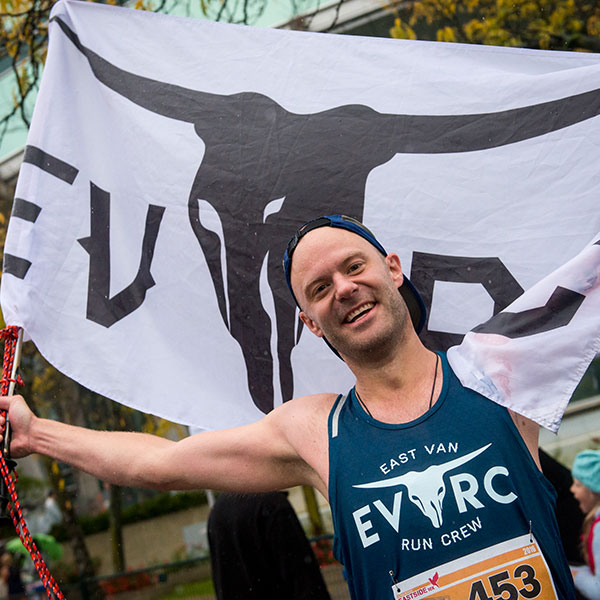
East Van Run Crew

Favourite Workout – Uhhh, we don’t really do structured work-outs at EVRC. We like to keep it pretty social on Monday nights and create a welcoming environment for runners of all abilities. On occasion you might see us sprinting up East 1st Ave towards Red Truck, at Empire Fields doing the odd lap of their odd lap or on a treadmill if there is a charitable running event happening in any dodgy warehouses around town.

Favourite Post-Run Spot – We usually meet at breweries in and around East Vancouver. Our mainstay has been Red Truck over the past year but other favourites include R&B, Big Rock, Strange Fellows, Parallel 49, Callister, Postmark & anywhere else where the beer flows like wine and beautiful women instinctively flock like the salmon of Capistrano.

Facebook Page | RunGuides.com Profile | Monday Night Group Runs


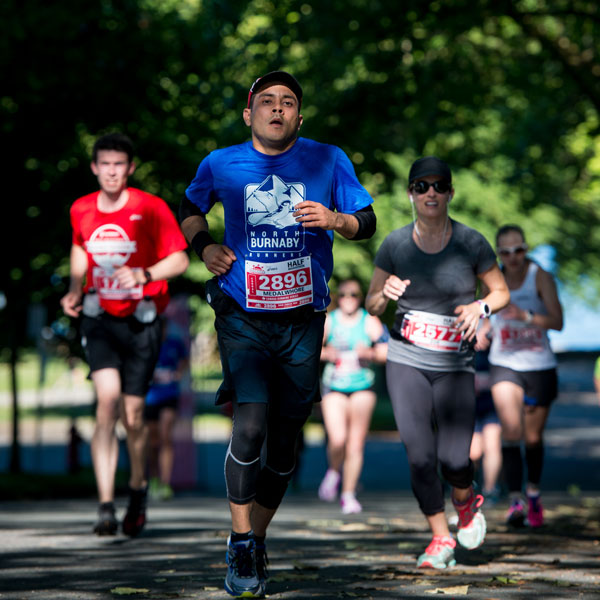
North Burnaby Runners

Favourite Workout – Our favorite run is our Wednesday night social run. We are an inclusive group and provide varied pace groups so there is something for everyone. The social run allows runners to go at their own pace and log some extra miles. For some this is the only run of the week and for others it an easy social pace run to break up some of the more challenging runs in their training plan.

Favourite Post-Run Spot – We always start and finish together and we take breaks along the way to re group. Our favorite meeting spot is Dageraad Brewing. Just a short walk from the Production skytrain station, this small brewery has a lot of character and treats us like family. They always have water waiting for us on the table when we are done running and most of the time they stay open later just for us. We love other destination runs but Dageraad is definitely our home base.

Facebook Page | Wednesday Group Runs


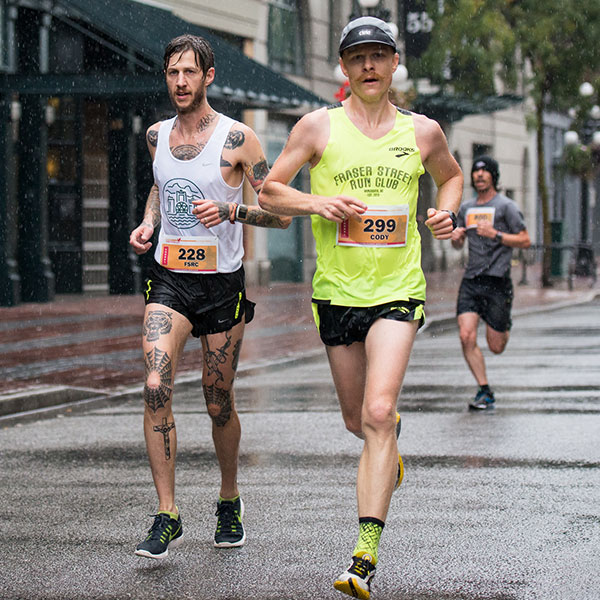
Fraser Street Run Club

Favourite Workout – Intervals on the Grouse Grind. I find doing a full, non-stop, hard Grouse Grind effort is often too long of a workout, so I like to break it up into 1/4. I’ll use the actual 1/4 trail markings and will take 1 minute rest for every 5 minutes it took be to do that quarter. For example: if it took me 15 minutes to do the first 1/4 I’d rest 3 minutes, but if it only took my 10 minutes for the second 1/4 I’d rest 2 minutes.

Favourite Post-Run Spot – One of our favourite places to go after a FsRC Feel Good Friday run is Sal y Limon on Kingsway & Fraser. It’s got great authentic Mexican food and easy to fit a large group of people.

Website | Track Tuesdays & Feel Good Fridays


Getting back on track after the holidays

By | General | No Comments

The holidays have a knack for veering even the most dedicated runners off-track. The desire to stay warm inside, eat and drink with friends, and let loose easily overrides the will to go into the winter weather and exert oneself out in the elements. However, when the socializing lessens, reality sets in and leaves people fretting over the time “lost” from training. Remember that taking a break from training isn’t a bad thing. It allows people to decompress and be ready to hit the ground running for their spring goals. Returning to training can either be exciting or daunting. Use these tips to help ease yourself back into the daily grind:

  1. Sign up for a race/event
    It’s a lot easier to find the motivation to kick-start training again if there’s a goal/endpoint. Training for the sake of training is hard to get motivated for, but by signing up for a race it will keep you on track and accountable to put the time and energy into getting adequately prepared.
  2. Treat yourself
    There’s nothing quite like a new pair of shoes or piece of clothing to get you fired up to train again. If something as simple as having a new shirt to workout in is enough to get you out the door, it’ll be money well spent. Not a clothes person? Even buying a few new songs to add to your workout playlist can do the trick!
  3. Just put your shoes on
    One of the hardest things to do is the first run back after a break. There are so many negative emotions that go through peoples’ heads – of not being fast anymore, that it’s going to hurt, that they’re out of shape etc. A few weeks off isn’t going to deteriorate your fitness, just your mental strength. So head out on your favourite route and you’ll find once that first run is done, the endorphins will start flowing and you’ll breathe in some fresh air then remember exactly why you keep running. After that, you’ll be more willing to get out again and ramp it up.
  4. Start slow
    There’s no need to go and bust out an intense workout on the first day back thinking you’ll be right back where you were before the break. It’s smarter to ease into it by doing a couple easier runs and then gradually begin to add in some intensity as you get back into the groove. If you’re dying to get back into workouts, begin with some unstructured fartlek style workouts to get some turnover, or incorporate some hill repeats. These workouts are great strength builders but are effort based leaving you satisfied at the end of the session.
  5. Stay consistent
    Create a realistic schedule and adjust your day to facilitate your training. By staying accountable to a program it’ll recreate positive training habits. Simple things like: training with a run group/training buddy a couple times a week; meeting or coffee post-run so you have to get out the door on time; or signing up for a class to use as cross-training are all great ways to keep you accountable and consistent.

2017 #ScotiaHalf Shirt Options

By | Scotiabank Vancouver Half | No Comments

We’ve just received our tentative shirt designs for this year’s Scotiabank Vancouver Half-Marathon & 5k participant t-shirts and now we need your input! Take a look at the two options above, then vote on your favourite style. The most popular version will chosen for the 2017 Asics race shirt that all participants will receive.

Voting closes at midnight on January 12.

Shirt Options

Click to enlarge

Planning an Effective Racing Season

By | General | No Comments

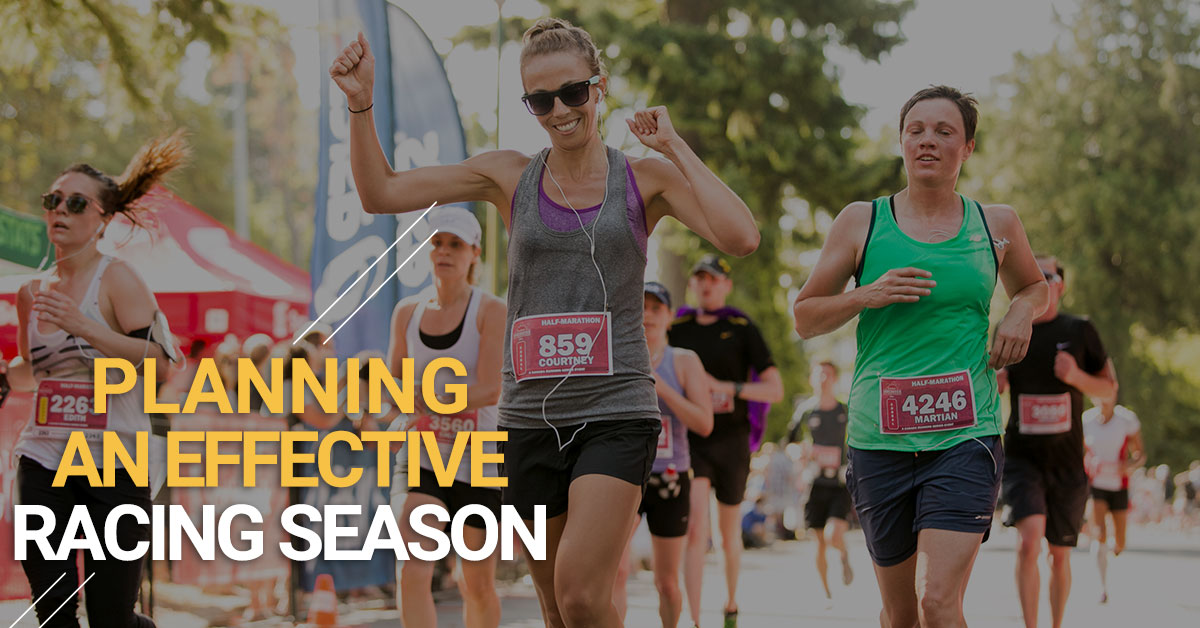
The start of a new year is associated with a feeling of possibility, motivation and determination that most hope to maintain through the year. However without an effective plan, goals and races fall by the wayside and can leave us feeling unfulfilled. With a strategic plan for a racing season, it’s easier to adhere to your goals and ultimately set ourselves up for success. While planning may take a little bit of time, patience and some restraint, being selective about the races you enter can be hugely beneficial for reducing risks of injury, burn-out and enabling opportunities to set new personal bests.

  1. Prioritize:
    Not all races are of equal importance during a racing season. Initially determine the goals you want to set for the season and create a plan based on that. What is the focus? Once that is determined (ie. setting a personal best; tackling a new distance; dabbling in trail races or road races), it’s easier to remain focused and on track.
  2. Pick a goal race
    Now that the main objective of the season has been set, you can choose what race is going to be the best choice for accomplishing that goal. During a season there are races that are sought after by many runners and can sell out quickly. If your goal race falls into that category it’s important to ensure you enter as soon as registration opens, and have a back-up plan if you’re unable to get into your top choice. There are many factors that go into choosing the focal race of the season: location, crowds, course, climate etc. as all of these things can play a role in the success of a race. Not good in hot weather? Don’t choose an event in the California summer. Aiming to attain the elusive Boston Qualifying time? Make sure the event is conducive to running fast times and is a Boston qualifying course!
  3. Set a performance target
    While it’s great to have a goal race, it’s important to have numerical goals as well. If it’s a distance you’ve never run before, then a personal best is inevitable. If it’s an event that you have done before, try and determine something you want to accomplish based on your past experiences. It’s important to have A, B, and C goals. ‘A’ goals can be seen as ‘inside voice’ goals, or ‘perfect day’ goals. They are the marks that you strive to hit on an ideal day if everything were to fall into place. Next is the ‘B’ goal; this is the goal that you can accomplish with proper training and preparation and doesn’t feel too lofty a goal. Finally, a ‘C’ goal is one where if it’s a terrible race day, you’ll still be happy with whatever happens. For more experienced runners ‘C’ goals tend to be merely completing the race. Having a spectrum of goals helps to avoid disappointment, and ensures a positive finish whatever the result may be.
  4. Establish a proper training cycle
    Depending on the goal race and your current fitness level, the length of a training cycle can vary. It’s not surprising that training for a marathon will require a longer build than the likes of a 5k. For experienced runners, 5-10k requires a 10-16 week plan, while half- to full-marathons are about 12-20 weeks. New runners, or people coming back from an injury may require a more gradual buildup.
    Many local run groups/crews or running stores will have clinics and workouts for people of all running levels. Joining a group can help to alleviate any stress over what kind of workouts to do, and can provide camaraderie throughout a training cycle. Hiring a personal running coach is another option for those who want a more tailored approach.
  5. Tune-up races
    During a buildup to a goal race, it can be beneficial to race in some shorter distances in order to establish a solid pre-race routine. So many race day stressors can typically be alleviated if the situation has been experienced before: pre-race meals; race etiquette; and other race day situations. The more often one races, the more natural the process becomes. Racing during a training cycle can also be used as a workout tool as they provide a more challenging workout than any solo run, and make for excellent benchmarks. They help to prepare for the mental and physical demands that come with racing so that by the time your target race happens, any race anxiety will be reduced.   However, try to avoid the temptation to over-race. With so many great races, it’s hard to pick and choose. Each race needs a role in the training and will ultimately help reach the goal that was set as a priority. Race a maximum of every 2-3 weeks. This will build race confidence and experience, but won’t cause you to be sick and tired of racing by the time the main race happens.
  6. Tapering is important
    No matter how long or short the goal race distance is, it’s crucial to properly taper. The distance of race will determine the length of the taper: short race distance = short taper period; and longer race distances = longer taper period. Be sure to trust in your training, coach, and teammates that everything that could be done for this event, has been.
  7. Plan for the after-math
    A race season isn’t finished when you cross the finish line. It’s good practice to debrief and evaluate how effective the race was. Was there anything that could’ve been done differently that would have bettered your performance? How can you use what you learned from this race to be better in the future?
  8. Allow time for a break
    Once the mental and physical stress of a training cycle is over, take a break. It may be hard sometimes when you’re feeling good and want to keep going, but know that your body needs to recuperate after a big effort. Regardless of if your targets have been hit or not, take a break from running in order to ensure you come back rested, strong and motivated for the next cycle.